

ISO Certification Stages Explained Clearly
- 4 hours ago
- 6 min read
If you are planning for certification, the point where many projects slow down is not usually writing procedures or booking an audit. It is uncertainty. Business owners and compliance leads often know they need ISO certification, but not what happens first, what happens next, or where certification bodies will focus their attention. That is exactly why ISO certification stages explained in plain business terms matters.
For SMEs in particular, the certification process needs to be manageable, proportionate and tied to real business outcomes. A well-run project should do more than help you pass an audit. It should improve control, clarify responsibilities and strengthen confidence with customers, tender panels and external stakeholders.
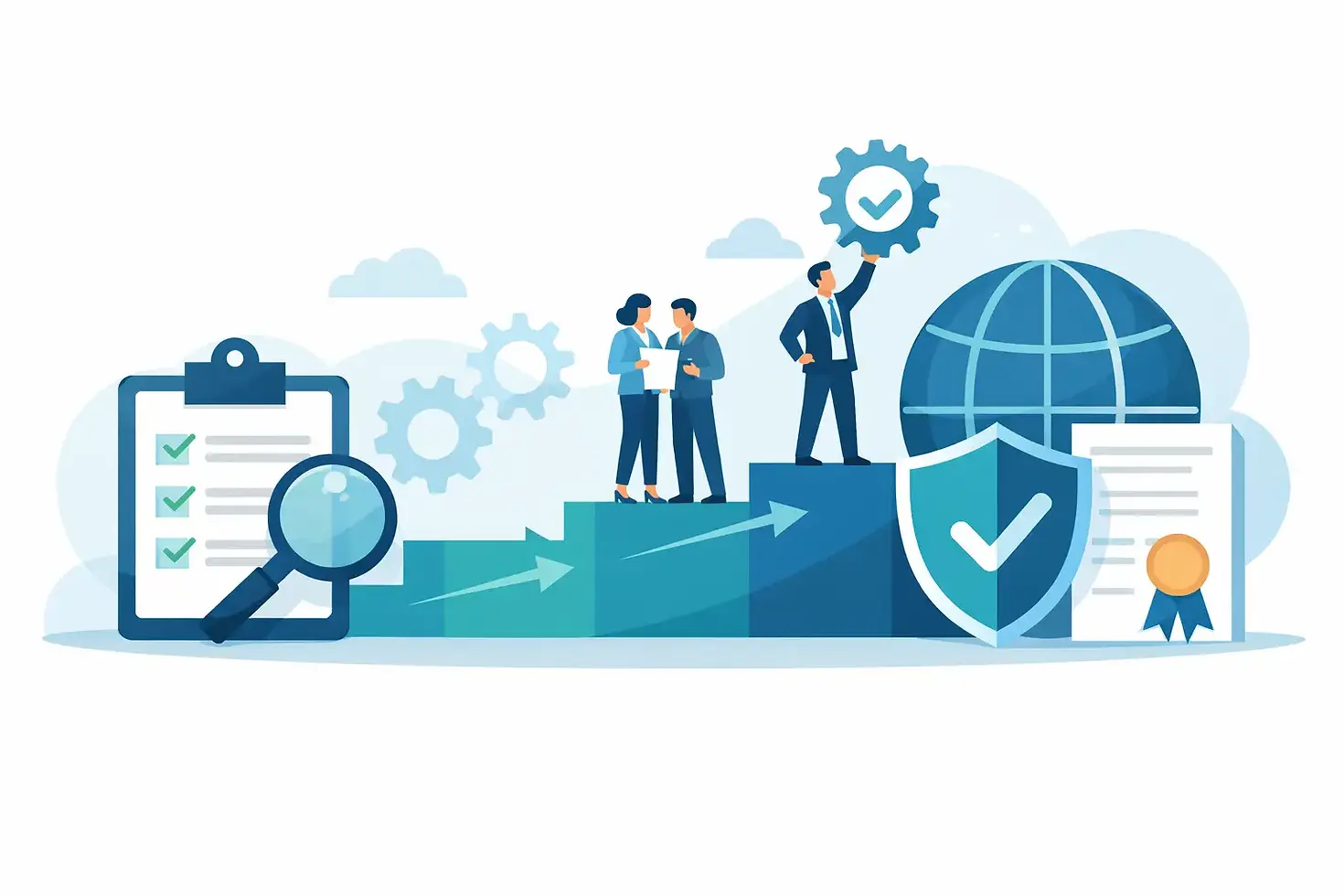
ISO certification stages explained from start to finish
Although the detail varies slightly between standards such as ISO 9001, ISO 14001, ISO 27001 and ISO 45001, the overall certification journey follows a familiar path. You review where you are now, build or refine the management system, test whether it is working, then move through formal external audit stages before entering ongoing maintenance.
The mistake many organisations make is treating certification as a paperwork exercise. Certification bodies do review documented information, but they are really assessing whether your management system is suitable, implemented and effective. That means the stages before the audit matter just as much as the audit itself.
Stage 0 - understanding scope, context and gaps
Before any formal audit, there is groundwork to do. This starts with defining the scope of the management system. In simple terms, that means deciding exactly what parts of the business, locations, services or products are included. If the scope is too broad, the project becomes harder than it needs to be. If it is too narrow, it may not meet customer or tender expectations.
At this point, a gap analysis is often the most useful first step. This compares your current processes, records and controls against the requirements of the chosen ISO standard. For a growing business, this can be reassuring because you may already be doing much of what the standard expects, just without the structure or evidence in place.
This early stage also involves understanding business context, key risks, interested parties and legal or regulatory obligations where relevant. For example, a health and safety management system will not be approached in exactly the same way as an information security system. The standard shapes the detail, but the purpose remains the same - build a management system around how the business actually operates.
Building the management system
Once the gaps are clear, the next stage is system development and implementation. This is where procedures, policies, objectives, process controls and supporting records are either created or improved. The strongest systems are never written in isolation from day-to-day operations. They reflect reality, assign ownership and make it easier for people to do the right thing consistently.
For SMEs, this is often where practical judgement matters most. A micro business does not need the same level of documentation as a multi-site organisation. Equally, a lightly documented system that no one follows will not stand up to scrutiny. The balance is to create enough structure to show control without creating unnecessary administration.
Training and communication sit inside this stage too. Staff need to understand what has changed, what is expected of them and how compliance links to their roles. External auditors will often test this through interviews, not just document review. If people cannot explain the process, the system is unlikely to be seen as embedded.
Preparing for certification audit stages
Before a certification body arrives, the management system should have been in operation long enough to produce evidence. There is no useful shortcut here. Auditors need to see that processes are working, records are being kept and issues are being addressed.
Two core activities are expected before certification. The first is an internal audit. This is your opportunity to test the system against the standard and against your own processes, identify weaknesses and correct them before the external audit. The second is management review, where leadership assesses performance, risks, opportunities, audit findings and improvement needs.
These are not box-ticking tasks. They demonstrate that the organisation has its own oversight and improvement mechanisms. If they are rushed or superficial, auditors tend to notice quickly.
Stage 1 audit - readiness review
The first formal external step is usually the Stage 1 audit. This is often described as a readiness review, and that description is useful. The auditor is not yet making a final certification decision. Instead, they are checking whether your organisation is prepared for the more detailed Stage 2 audit.
During Stage 1, the auditor typically reviews the scope, documented information, key policies, legal and compliance considerations where relevant, internal audit results, management review outputs and general understanding of the standard. They may also look at site-specific conditions and discuss operational activities.
For some businesses, Stage 1 can feel less intense than expected. For others, it highlights issues that need serious attention. That depends on how mature the management system is. Common findings at this stage include unclear scope, missing evidence, incomplete internal audits or weak links between documented procedures and actual practice.
A good Stage 1 outcome does not mean perfection. It means the certification body has enough confidence that your organisation is ready to move to Stage 2 once identified issues are addressed.
Stage 2 audit - full certification assessment
Stage 2 is the main event. This is where the auditor evaluates whether the management system is fully implemented and effective. They will test how your processes work in practice, sample records, speak with staff and assess whether the business is meeting both the standard requirements and its own internal arrangements.
This audit is much more detailed than Stage 1. Auditors are looking for evidence of operational control, monitoring, corrective action, competence, leadership involvement and continual improvement. Depending on the standard, they may also focus heavily on risk management, legal compliance, environmental aspects, information security controls or workplace hazards.
Findings from Stage 2 generally fall into two categories - minor nonconformities and major nonconformities. Minor issues usually mean there is a weakness or isolated lapse that does not undermine the overall system. Major issues indicate a more significant failure in implementation or control. Certification is far more likely to proceed with minor findings than with major ones, although this depends on successful corrective action.
For SMEs, the key point is this: auditors do not expect a perfect business. They expect a controlled business that recognises issues, acts on them and can show evidence of management oversight.
What happens after Stage 2
If the certification body is satisfied, and any required corrective actions are accepted, certification is recommended and the certificate is issued. That is a significant milestone, but it is not the end of the process.
Certification is maintained through surveillance audits, usually annually, with recertification on a three-year cycle. Surveillance audits are designed to confirm that the system is still operating effectively and continuing to improve. They are not usually as broad as the original Stage 2 audit, but they are still rigorous.
This is where some organisations lose momentum. Once the pressure of first certification passes, records become inconsistent, internal audits are delayed and management review slips down the priority list. That creates avoidable risk. A management system only delivers long-term value when it is used as a business tool, not stored as an audit file.
Surveillance and continual improvement
Surveillance should not be seen as a yearly hurdle. It is better viewed as an external checkpoint on a system that is already active. If objectives are monitored, incidents or nonconformities are investigated properly, and process owners take responsibility for their controls, surveillance audits become far more straightforward.
Continual improvement does not always mean major change. It can mean tighter controls, clearer reporting, better staff awareness or fewer repeat issues. For smaller businesses, modest improvements applied consistently often create stronger results than large-scale system redesigns.
Where businesses usually struggle
When ISO certification stages are explained properly, one thing becomes clear - most problems arise before the auditor arrives. Businesses tend to struggle when responsibilities are vague, documentation has been copied from another organisation, or implementation has not kept pace with what the manual says.
Another common issue is underestimating time. Certification projects often take longer than expected because key people are balancing implementation with operational demands. That is normal, especially in SMEs. The answer is not to rush the process, but to structure it properly and focus effort where it makes the biggest difference.
It also depends on your starting point. A business with mature processes and strong leadership engagement may move efficiently through the stages. One dealing with inconsistent controls, customer complaints or weak internal accountability may need more preparation. Neither position is unusual, but the route should reflect the reality.
For organisations that want a clear, hands-on route to certification, support from experienced specialists can reduce delays and make the process more commercially useful. That is particularly true where the goal is not only to achieve certification, but to improve performance alongside compliance, which is where a consultancy such as ParagonQMS can add real value.
The most effective certification projects treat each stage as part of a wider business improvement journey. When the system is built around your operations, your people and your risks, certification stops being an isolated target and starts becoming evidence that the business is well run.




Comments